.webp)
End-to-End Fraud Prevention, Across Applicants and their Businesses
Our Approach to Fraud Prevention


Applicant Fraud Signals
Business Fraud Signals
FAQs
Fraud doesn't wait for a clean onboarding flow. Worth surfaces risk signals early, verifies business identity across dozens of data sources, and supports accurate decisions before exposure compounds. Below are the most frequently asked questions about how Worth approaches fraud detection, risk decisioning, and compliance.

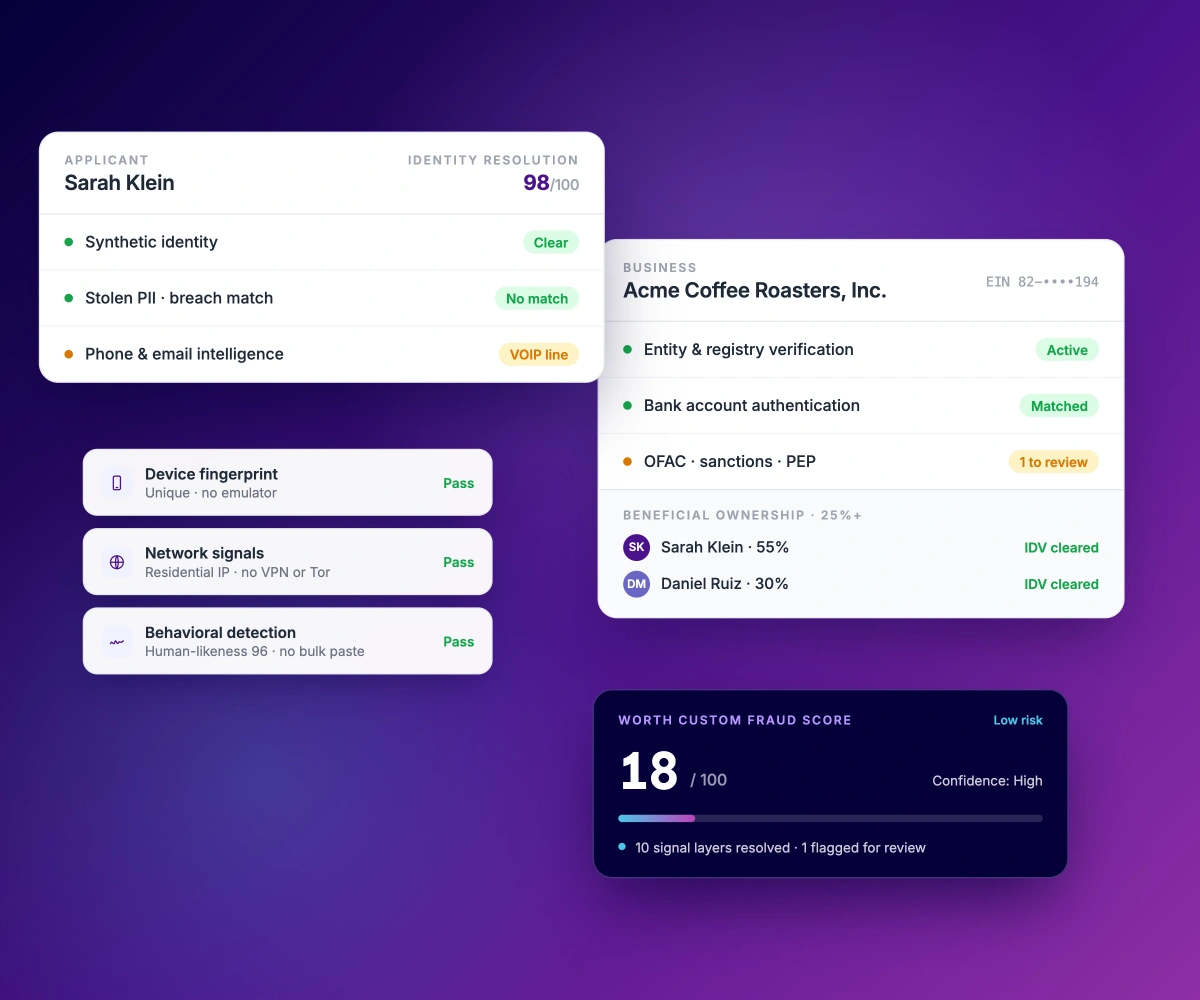
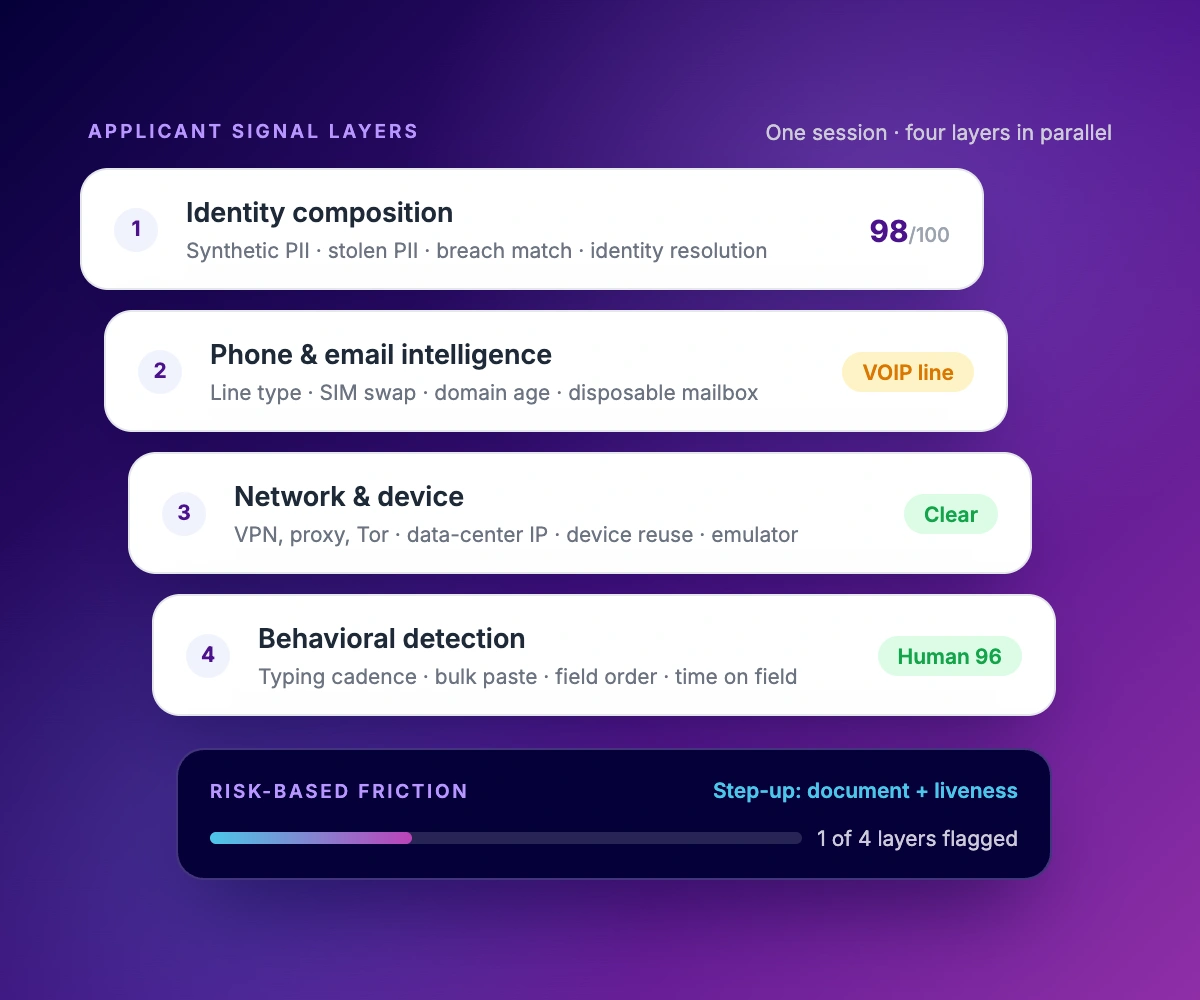
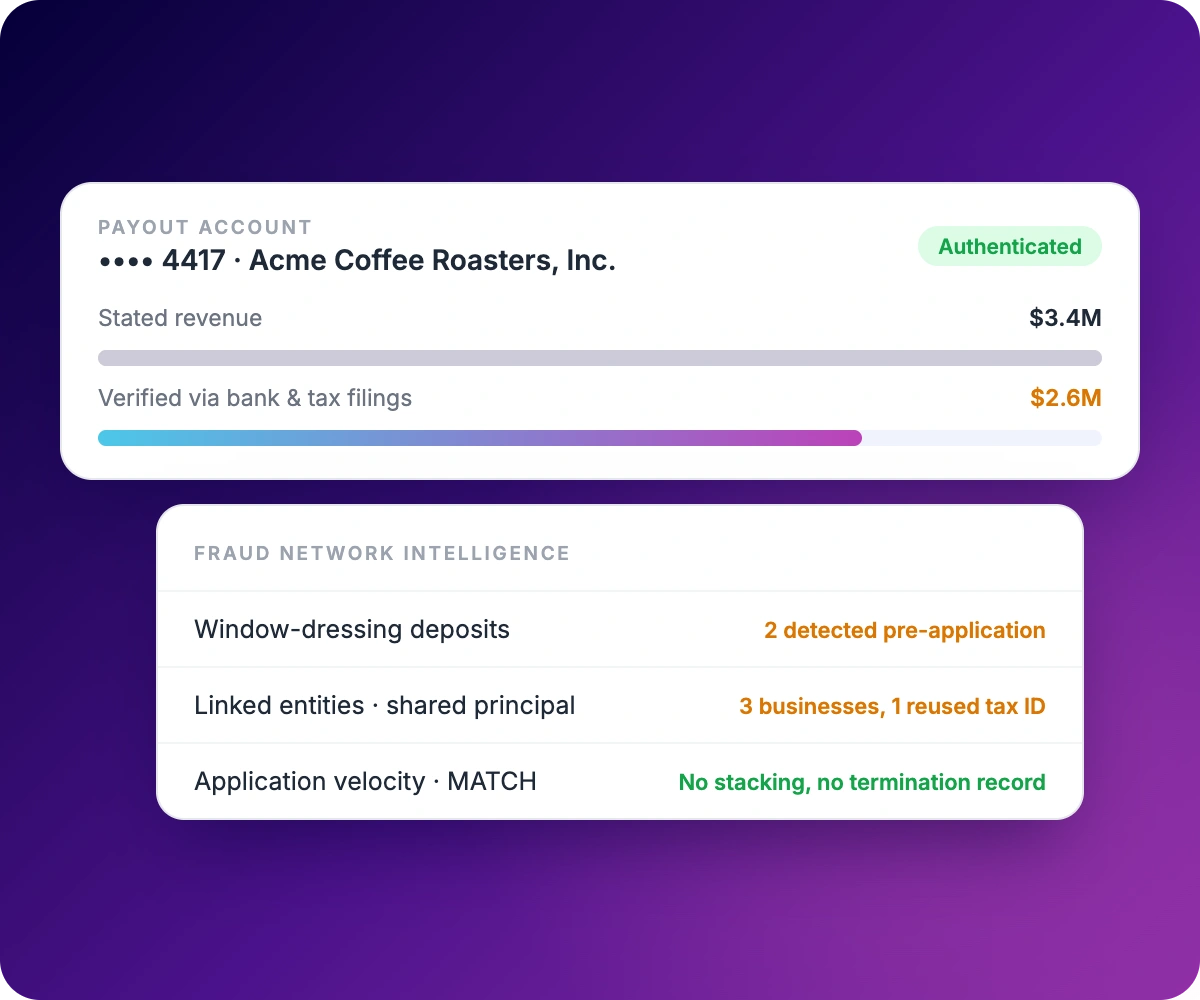
Worth covers applicant fraud, including synthetic identity, stolen PII, behavioral anomalies, device and network signals, as well as business fraud, including entity fabrication, ownership misrepresentation, coordinated fraud networks, and bank account fraud. Both are checked in a single onboarding workflow, so there's no coverage gap between the person and the business they represent.
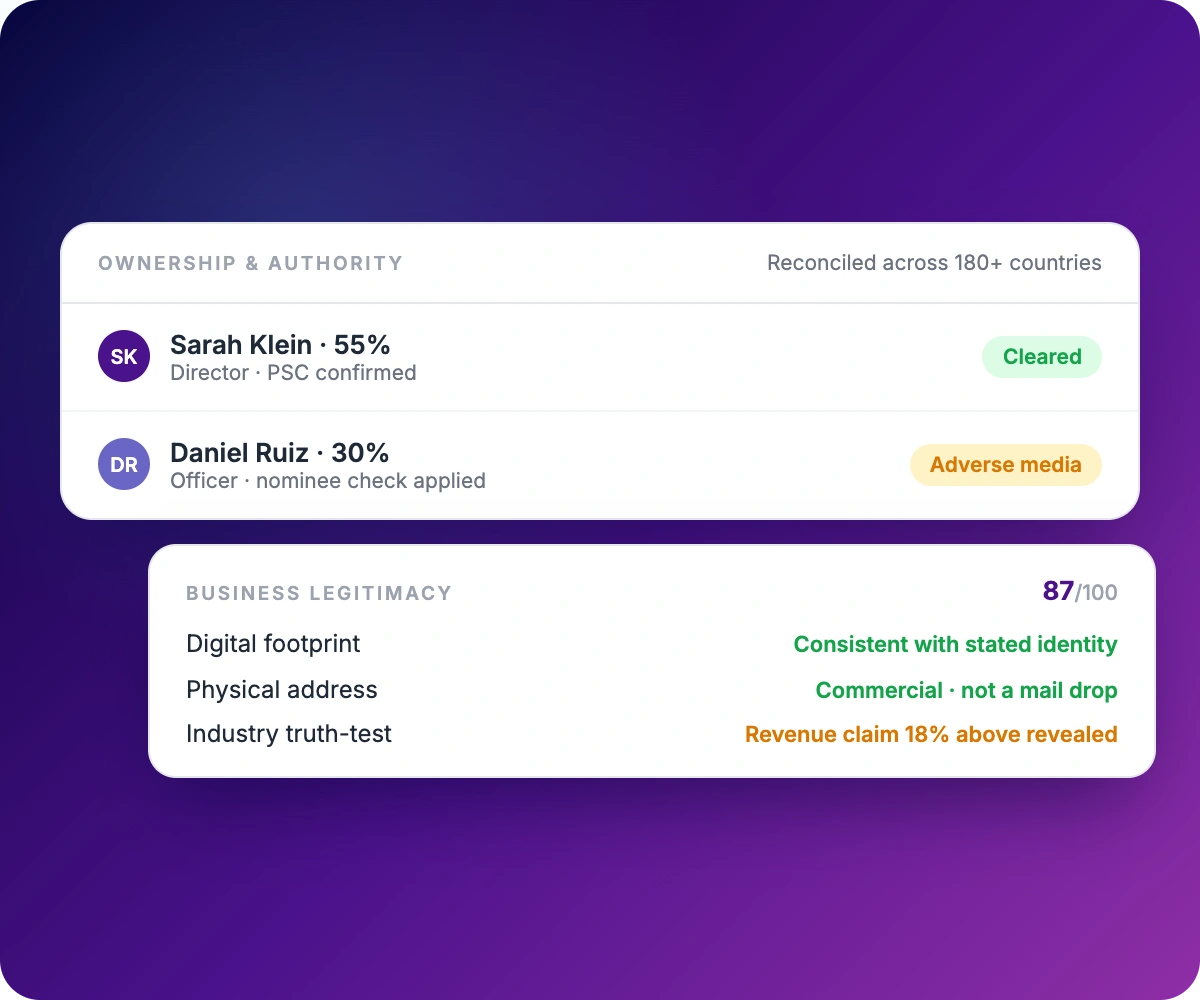
Yes. Worth verifies the applicant and the business behind them independently, then reconciles ownership and control across both. Beneficial owners at the 25%+ threshold are identified and subject to per-owner IDV as part of the same workflow — no separate vendor required.
Business entity verification, ownership resolution, KYB, and AML/PEP/sanctions screening cover 200+ countries and territories.
Yes. Document capture and biometric proofing are available in the Worth-hosted onboarding flow. Liveness checks include facial recognition, motion detection, and selfie-to-ID matching. ID document checks authenticate passports, driver's licenses, national IDs, and utility bills with MRZ and barcode parsing. For API-based flows, PII is validated against authoritative consumer data sources without requiring in-session capture.
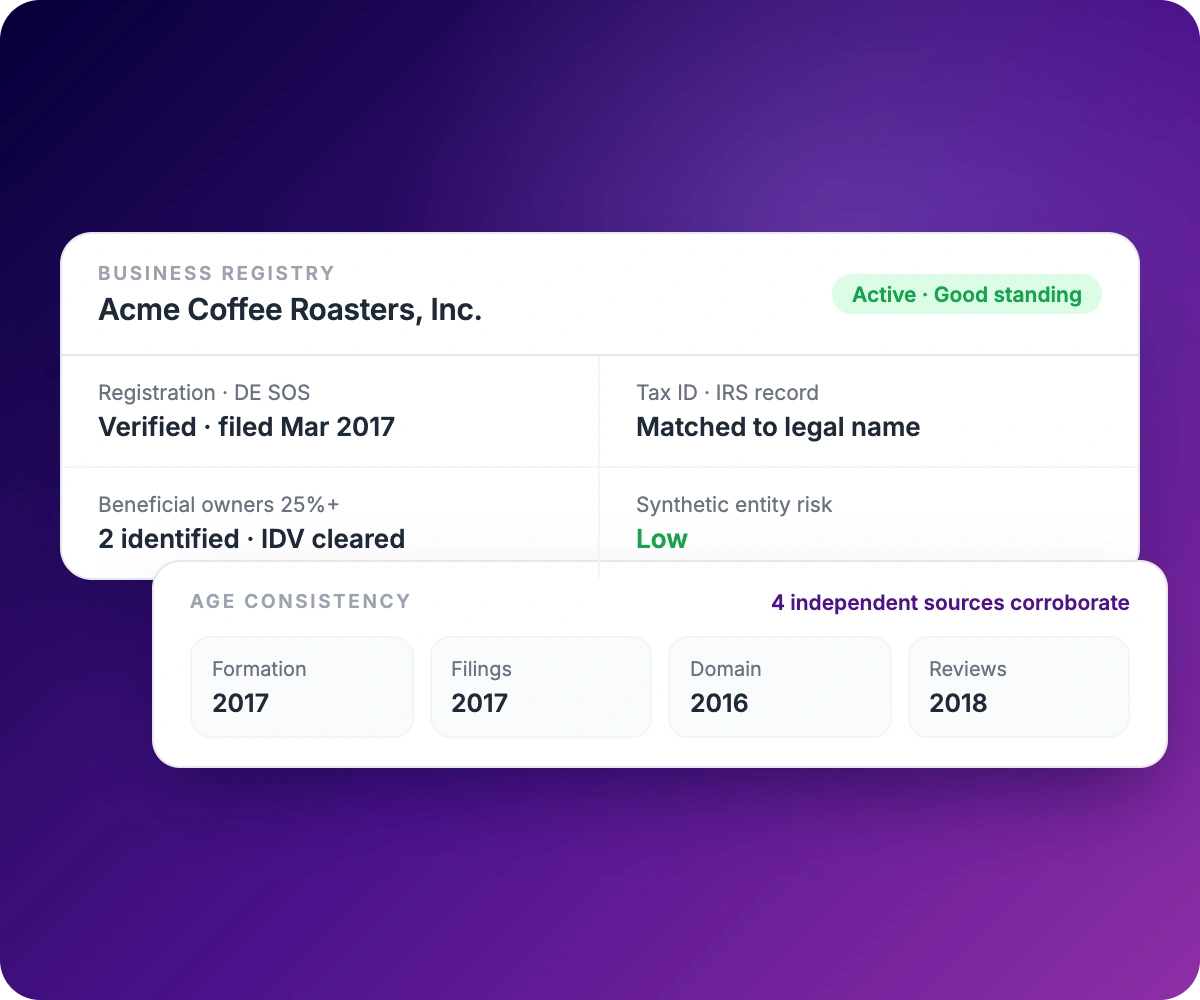
For applicants, Worth validates national-ID issuing patterns, checks PII consistency against credit history, and flags identifier reuse across email, phone, and ID combinations — with death-registry screening applied. For businesses, synthetic entity signals include registry mismatches, failed tax-ID validation, missing beneficial ownership, and thin corroboration across independent sources.
Yes. Continuous monitoring runs ongoing surveillance across sanctions, watchlists, public records, and identity signals. Changes that cross configured thresholds trigger alerts in case management — no manual re-verification required.
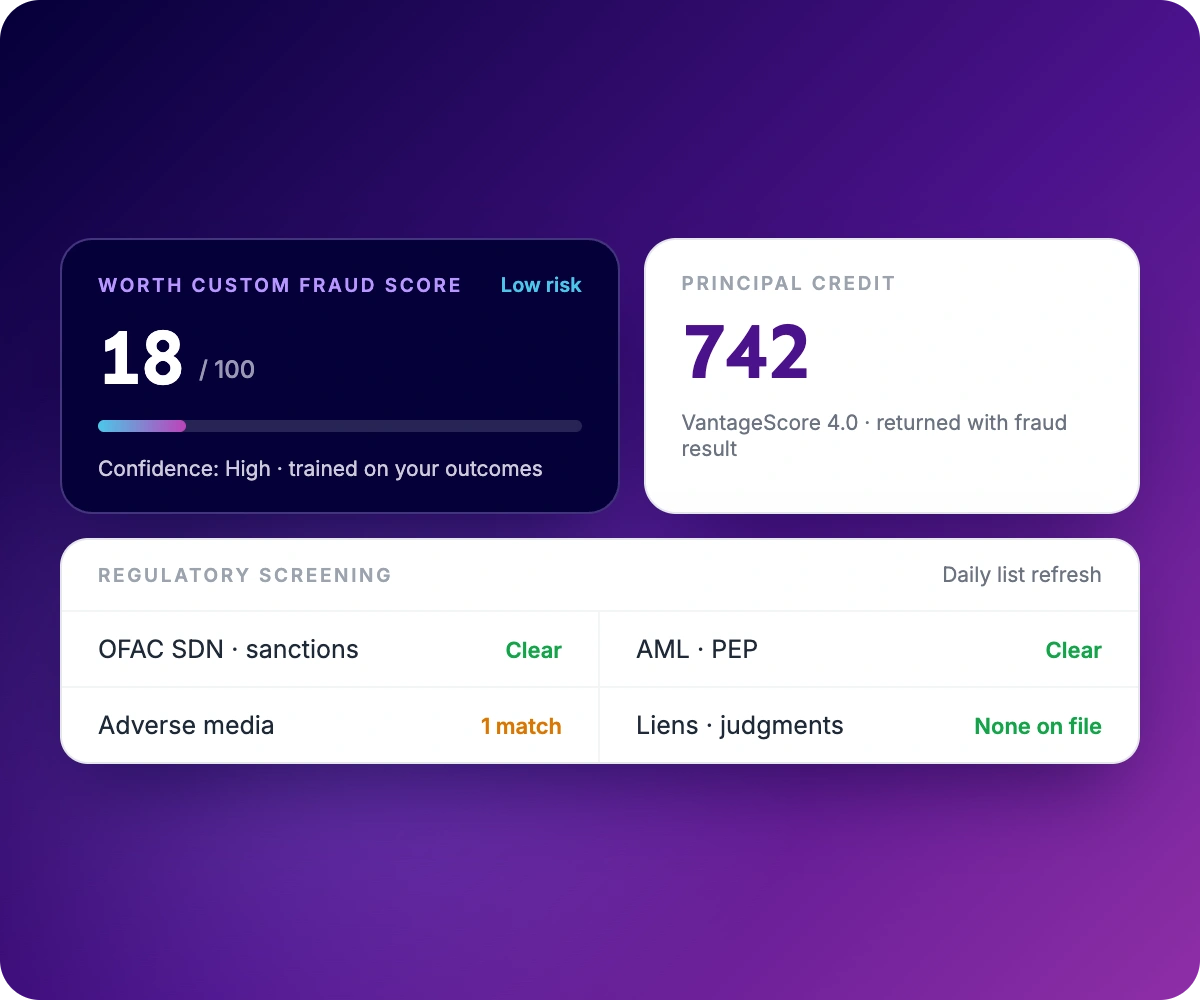
Real-time OFAC SDN and consolidated sanctions screening with daily list refresh, AML and PEP screening, and adverse-media coverage across 180+ countries and territories. Personal insolvencies, civil judgments, tax liens, collections, and charge-offs are also surfaced.
Yes. Worth is SOC 2 Type II certified and GDPR and CCPA compliant. Contact us to request the report.
Yes. We use 24/7 security monitoring, intrusion detection systems (IDS), and behavioral analytics to identify and mitigate threats in real-time.
Worth has a formalized incident response plan, which includes Real-time threat detection & containment, Immediate notification to affected stakeholders, Forensic analysis and remediation efforts, Regulatory compliance reporting where applicable.
No, Worth has never experienced a data breach. We maintain strict security controls, continuous monitoring, and regular penetration testing to proactively mitigate threats.
We follow a proactive vulnerability management program, including Regular automated and manual vulnerability scans, Patch management for critical security updates, 24/7 on-call security staff for immediate vulnerability response.
Yes. Worth maintains cyber liability insurance and errors & omissions (E&O) coverage, ensuring protection against cybersecurity incidents.
Yes. We provide SOC 2 reports, security whitepapers, and compliance attestations upon request. Enterprise customers can request custom security questionnaires for vendor risk assessments.
Worth complies with financial, AI governance, and data protection regulations, including SOC 2 Type II (Security, Availability, Confidentiality), GDPR, CCPA, and international data privacy laws, Financial compliance frameworks.
Yes. Our BCDR plan includes Geographically redundant infrastructure, Automated failover mechanisms, Regular disaster recovery testing. We maintain 99.99% uptime SLAs to ensure high availability.
.webp)


