.webp)
Onboarding 2.0: Solving Rigid Templates with Worth’s Configurable Flow

Worth's Custom Onboarding is built to follow your intake process and give your team direct control over how applicant forms are configured, without engineering work each time something needs to change. Three recent updates extend that. Our Custom Onboarding flow allows for fully flexible custom field placement, dynamic applicant routing, and multilingual support in three new languages.
Custom fields that follow your process
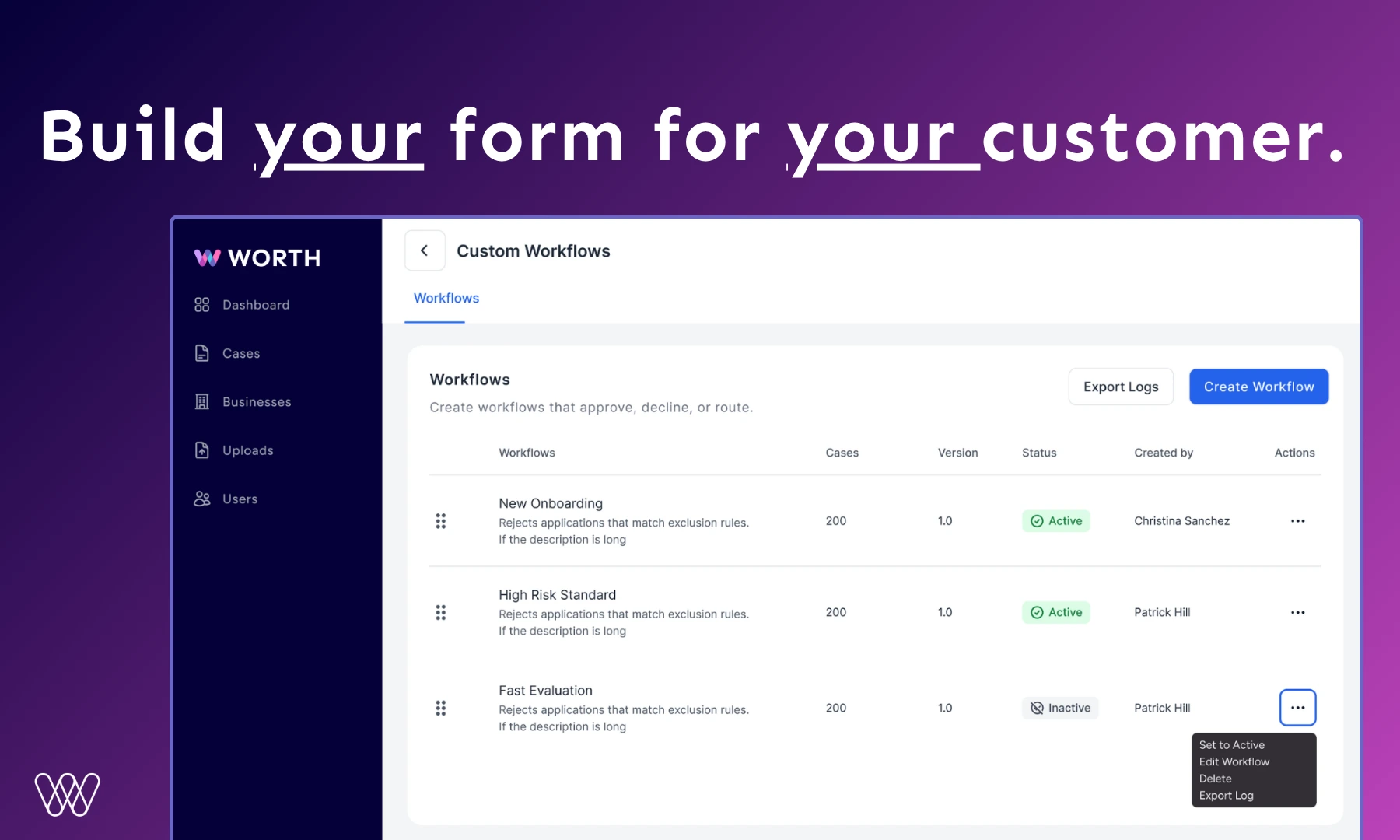
The most common limitation in configurable onboarding isn't whether a platform supports custom fields, but where those fields can go. Most platforms drop custom fields into predetermined sections, in a fixed order, with limited control over placement or sequencing. For institutions with complex or regulated applications, that constraint shapes the entire intake experience.
In the Worth platform, custom fields can be placed on any page, in any section, in any order. If your intake process requires a specific credential early in the flow, it goes there. If a disclosure belongs at the end of a particular section rather than the beginning, you control that. The form follows your workflow, not the platform's defaults.
For example, a healthcare lender collecting NPIs from medical providers needs those fields in a precise sequence, tied to specific sections of the application, or a financial institution working with licensed professionals might require credential verification at a different stage.
Forms that adapt to applicants in real time
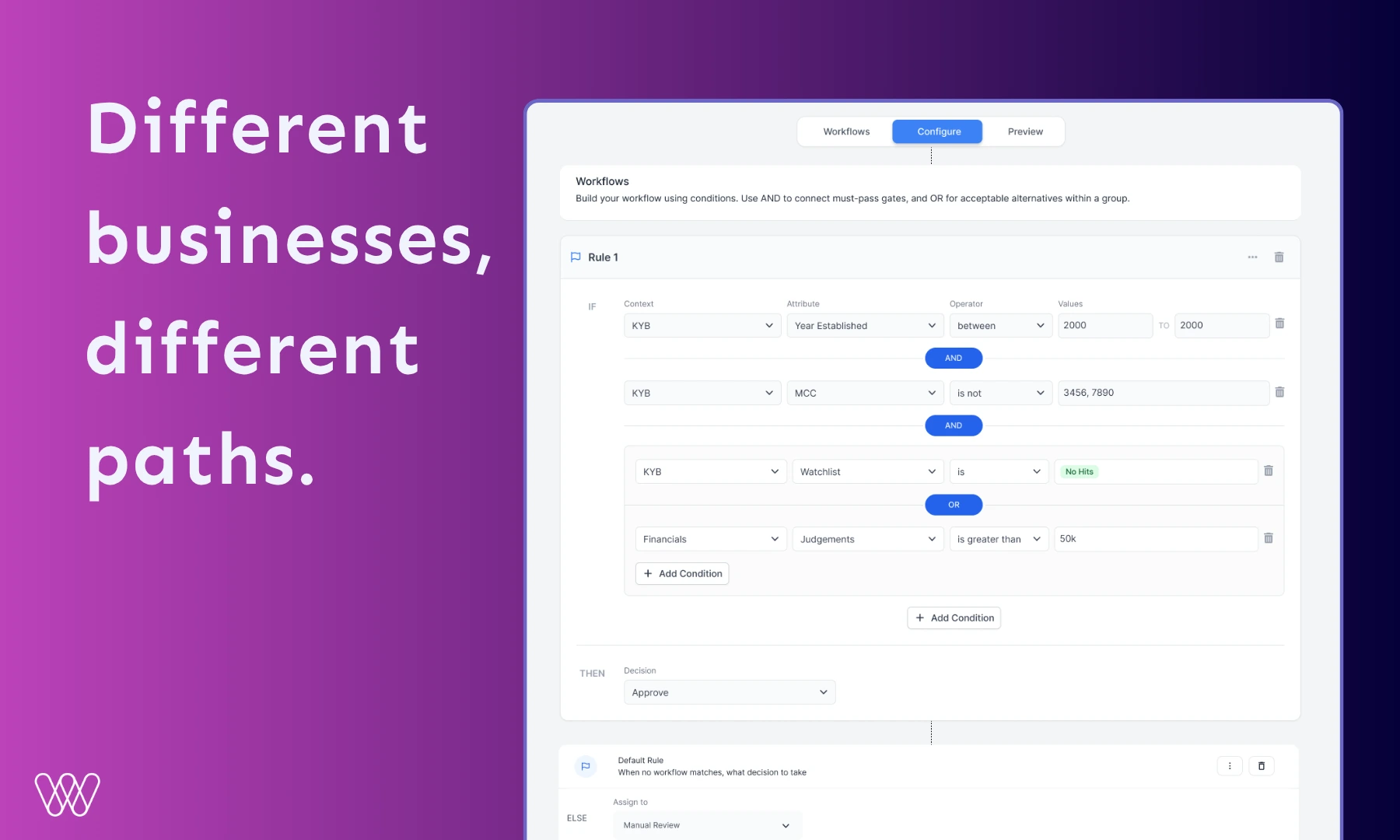
Conditional routing takes configurability a step further. Rather than building and maintaining separate onboarding flows for each applicant type, institutions can define one flow that branches dynamically based on what applicants provide.
Any data point can trigger a fork in the path, such as MCC codes, business type, owner count, revenue range, and more. When an applicant's input matches a defined value or crosses a defined threshold, the form routes them accordingly. For example, a sole proprietor and a multi-owner LLC move through different sections automatically. Or, a lender with post-offer requirements — questions or disclosures that only appear after certain conditions are met — needs the form to reflect that logic accurately.
The alternative is maintaining parallel flows with one per applicant type, each requiring its own updates when requirements change. That creates administrative overhead for your team. It also creates friction for applicants, who consistently cite irrelevant questions as one of the top reasons they abandon an application before completing it.
A single flow that adapts in real time addresses that friction at the source. Applicants move through fields relevant to their situation. As a result, completion rates improve, and your team manages one flow definition instead of several.
Onboarding without language barriers
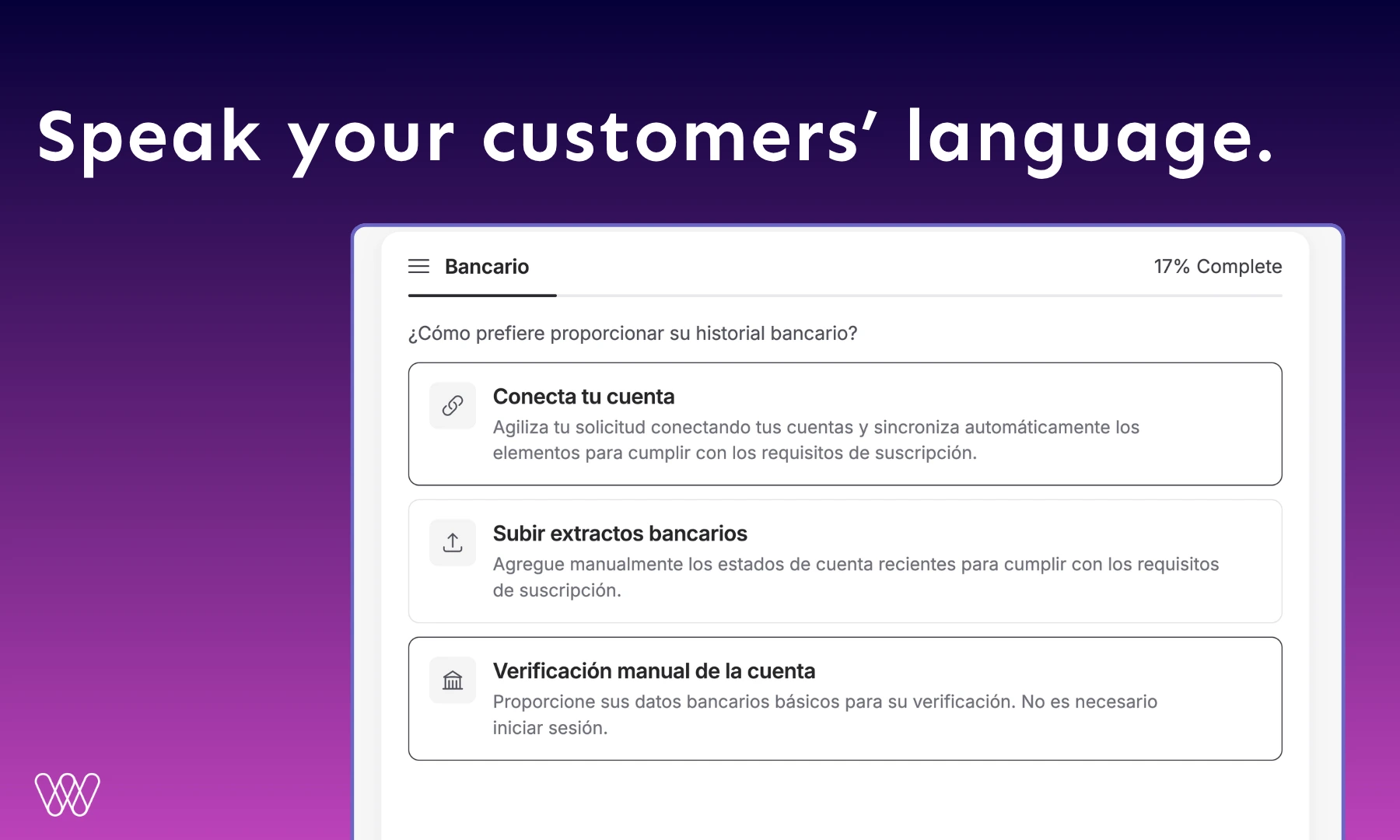
Onboarding is now available in French, French Canadian, and Spanish. For institutions serving communities across language boundaries, this expands who can realistically complete an application.
The language layer is built directly into Worth's onboarding template. Supporting an additional language is a simple configuration choice. You can select the languages your applicant population needs, and the form renders accordingly. There's no separate template to build or maintain, no parallel implementation to keep in sync with your primary flow.
The three languages available now reflect the most common needs across Worth's current customer base, with more on the roadmap.
Built around your process
Custom fields, conditional routing, and multilingual support are three distinct updates, but they each address the underlying issue of onboarding flows built around a platform's limitations rather than an institution's actual process.
More updates are coming before the end of the year. If you want to talk through how any of these features apply to your current onboarding setup, book a demo today.



.webp)


